
 Sophia Windsor
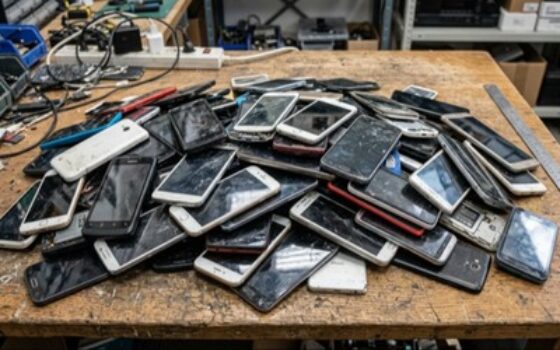
[ Gearbest Technology News]Recently, the University of California, San Diego and Google Research announced a cooperation to use 2,000 obsolete Pixel smartphones to build a resource-saving data center, which is scheduled to be put into operation in the fall of 2026. The project aims to provide students with affordable cloud computing resources while reducing e-waste and CO2 emissions.
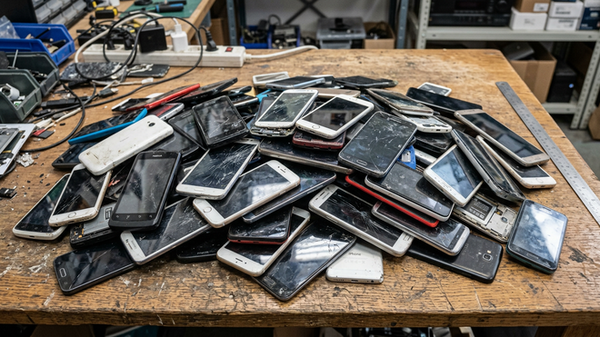
old mobile phone
The research team removed the screen, camera, sensors and lithium battery from the phone, leaving only the motherboard with the processor and internal storage. To improve hardware efficiency, the operating system was replaced with a standard Linux distribution from Android, thus eliminating bottlenecks such as background application restrictions. Subsequently, the orchestration software Kubernetes organized 25 to 50 motherboards into a cluster, and the computing power of each cluster was comparable to that of a two-socket server.

Google Pixel phone
Preliminary tests show that a system of 20 devices is sufficient to support the programming tasks of 75 students, with lower latency than commercial cloud services. However, the 8 to 12GB of memory per device has become a shortcoming, and this solution is not suitable for large-scale data centers due to high management complexity. The entire system will simultaneously support 100 computer courses in the future and serve as a test platform to verify the reliability of consumer-grade hardware under sustained high load.
This project is particularly suitable for educational institutions with limited budgets. Researchers said that if the proof of concept is successful, more universities and research institutions are expected to use recycled mobile phones to expand IT infrastructure. In terms of single-core performance, old mobile phone chipsets from three or four years ago often even exceed traditional server chips. Consumers replace their mobile phones on average every four years, but the processors still have high computing power. Using old mobile phones to build servers can not only save resources, but also provide new ideas for electronic waste recycling.


 Login with Google