
 Sophia Windsor
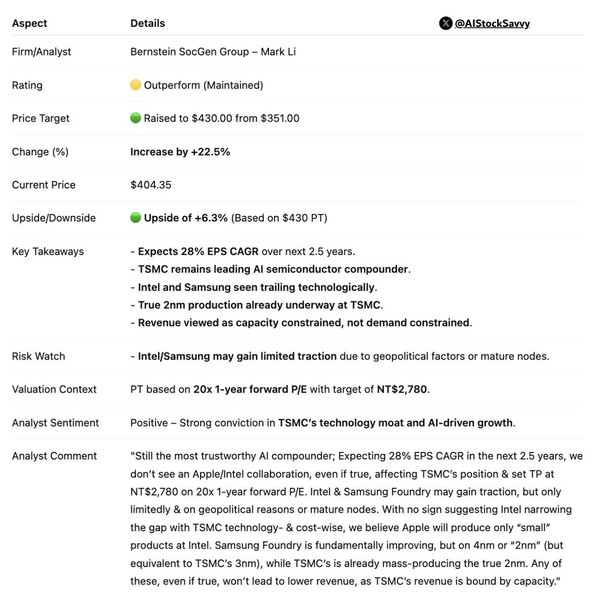
[ Gearbest Technology News]On May 19, some foreign media published an article saying that according to the latest report released by Bernstein Research Institute, although there are expectations for foundry cooperation between Apple and Intel, due to the small scale of orders and the gap in process technology, it is expected that TSMC’s dominance in the high-end chip foundry market will not be shaken in the short term.
Intel, TSMC and Apple
The report pointed out that there is currently no sign that Intel is closing the gap in process technology with TSMC. According to the previously disclosed cooperation framework, Apple is expected to use Intel's 18A-P process to manufacture basic M7 chips starting in 2027. In addition, the A21 chip planned to be released in 2028 may also use Intel's 18A-P or 14A process. Currently, Apple has obtained process design kit samples of Intel's 18A-P process for internal evaluation.
In addition to mobile chips, Apple's dedicated ASICs for data centers and AI servers are also considered a direction for cooperation. GF Securities research report predicts that Apple’s new generation ASIC, code-named Baltra, is planned to be launched in 2027 or 2028 and will use Intel’s EMIB packaging technology. This move is aimed at coping with the supply pressure of the current tightening of TSMC’s CoWoS production capacity.
Bernstein pointed out in the report that although Samsung's foundry technology continues to improve, its overall level still lags behind TSMC. Currently, TSMC is the only company in the world that can achieve mass production of true 2nm chips. Analysts believe that although Samsung and Intel are expected to receive more orders in the future, this is more due to geopolitical and supply chain diversification considerations, and is mainly concentrated in mature process nodes. In the field of high-end advanced processes, TSMC still has a clear leading advantage in the short term.
Recent industry signals show that AMD has awarded some 2nm CPU orders to Samsung. At the same time, TSMC is consolidating its position through large-scale capital expenditures. Currently, there are about 12 factories in various stages of construction, aiming to lock in the production capacity of 2nm and subsequent 1.4nm nodes. The agency concluded that the cooperation between Apple and Intel is more like Apple’s hedging and diversification layout at the supply chain level, rather than a complete shift towards TSMC. Considering Intel’s mass production experience and scale limitations in advanced processes, the scale of the relevant orders is not enough to change the current industry competition landscape.





 Login with Google