
 Gearbest Tech
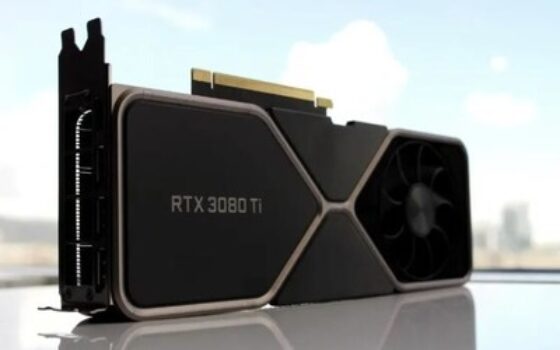
[Gearbest Technology]Nvidia and AMD are the best graphics card suppliers on the market, but choosing between the two is never easy. Different from the past, in 2024, these two companies have launched a fierce competition, and our choice of brands is no longer as simple as simply counting money.
Some foreign media have studied every graphics card released by AMD and Nvidia this generation, not only comparing their basic performance, but also evaluating functions such as DLSS and FSR, ray tracing performance and the operation of VRAM in modern games.
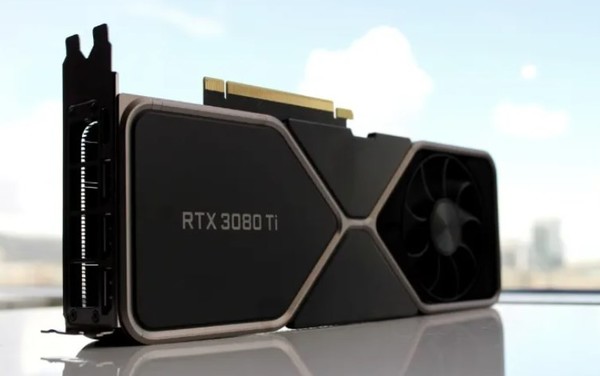
Before that, let’s first take a look at the basic situation of Nvidia and AMD in 2024. Both already have mature product lines and no new products are expected to be released this year. We expect Nvidia and AMD to launch next-generation graphics cards by the end of the year and early next year.
NVIDIA uses Ada Lovelace GPU, which is the RTX 40 series graphics card. There are a total of 10 products, but strictly speaking, only 8 belong to NVIDIA's current product line. Among them are:
RTX 4090 series
RTX 4080 Super
RTX 4080 (discontinued)
RTX 4070 Ti Super
RTX 4070 Ti (discontinued)
RTX 4070 series
RTX 4060 Ti 16GB
RTX 4060 Ti 8GB
RTX 4060 series
The two absent GPUs are the RTX 4070 Ti and RTX 4080, which have been replaced by the Super refresh. The RTX 4070 is the only GPU to have both a Super refresh and co-exist with the new model. Although the RTX 4080 and RTX 4070 Ti are technically discontinued, you can still find them in stock at some channels at the time of writing.
In addition to the Super refresh version, another peculiarity in Nvidia's product line is the RTX 4060 Ti. Nvidia sells two versions of the GPU, one with 8GB and the other with 16GB. They are the exact same graphics card, just with different memory capacities.
In comparison, AMD's lineup is smaller, with only 7 GPUs and no Super refresh versions. Here’s an overview of the AMD RDNA 3 series:
RX 7900 XTX
RX 7900 XT
RX 7900 GRE
RX 7800 XT
RX 7700 XT
RX 7600 XT
RX Model 7600
If you stick with a particular brand, you may not always be able to find a replacement at the corresponding performance level. For example, the RTX 4060 Ti is more powerful than the RX 7600 XT, which in turn is more powerful.
Price and availability
Directly comparing the official pricing of current GPUs from AMD and Nvidia is not very meaningful, because as the product life cycle advances, price changes have caused more direct competition between some GPUs. Here are the prices of various current-generation GPUs when they were released:
RTX 4090 — $2,000
RTX 4080 — $1,130
RX 7900 XTX — $930
RTX 4070 Ti — $800
RX 7900 XT—$700
RTX 4070—$600
RX 7900 GRE—$550
RTX 4070 — $540
RX 7800 XT — $500
RTX 4060 Ti 16GB — $450
RX 7700 XT — $400
RTX 4060 Ti 8GB — $400
RX 7600 XT — $330
RTX 4060—$300
RX 7600 —$270
The following general trends can be observed:
One is that AMD GPUs are generally priced lower. For example, not only is the RX 7600 the most affordable option in the current lineup, but models like the RX 7800 XT also cost slightly less than the competing RTX 4070.
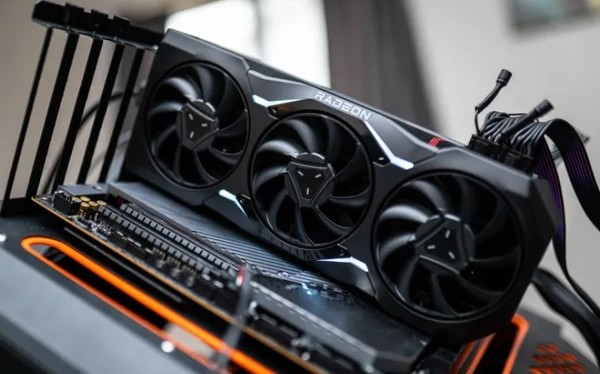
Second, with the exception of one GPU, all listed GPUs are available at major online retailers, either at the original price or below. The exception is the RTX 4090, which even today is hard to find for under $2,000 due to demand outstripping supply due to the burgeoning AI field. It's not the best time to buy an RTX 4090 right now, and it may never be.
Third, even leaving aside the special situation of RTX 4090, AMD still has a clear advantage in pricing strategy. Nvidia's product line has many market segments in the 400-600 range, while AMD has a more streamlined product lineup in this price range with clear performance ladders. In the high-end market, most of Nvidia's GPUs still maintain their original prices, mainly relying on the support of the Super refresh version, while AMD's option prices have gradually dropped.
performance
Starting from 4K, Nvidia has a clear upper hand in the high-end performance competition. The GPU power of the RTX 4090 is unrivaled, putting Nvidia ahead of the competition. In the high-end market, the RTX 4080 Super beats AMD's direct competitors, but in the sub-$1,000 range, AMD has the advantage. For example, although the RX 7900 XT sells for $100 less than the RTX 4070 Ti Super, it shows stronger performance.
This trend continues at 1440p resolution, especially on the RX 7900 GRE. It beats the RTX 4070 Super by $50 and is significantly better than the RTX 4070 at the same price point. Similarly, the RX 7800 XT offers slightly better performance at about $50 cheaper than the RTX 4070.
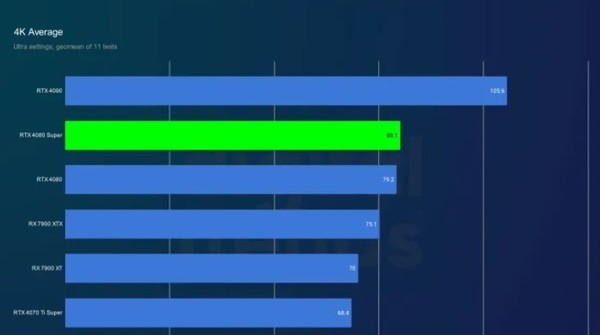
Although ray tracing is Nvidia's traditional strength, in non-ray tracing games, AMD's competing products often provide better performance for the same price.
However, at 1080p resolution, the situation is reversed, which is particularly surprising considering the lackluster performance of cards such as the Nvidia RTX 4060. Compared to the RTX 7700 Ti, the RX 4060 XT is a good choice, but at the lower end, the RX 7600, especially the RX 7600 XT, fails to impress. At this time, Nvidia's RTX 4060 and RTX 4060 Ti provide 1080p gamers with a more balanced choice.
Looking at overall performance, AMD offers a stronger performance between high-end 1080p gaming and low-end 4K gaming. Nvidia offers higher peak performance overall and better price/performance at the bottom of the product line. However, in addition to performance considerations, there are many other factors to pay attention to.
In terms of the above, AMD wins with better overall performance.
Ray tracing
Nvidia has been the leader in ray tracing since the release of RTX GPUs in 2018, but now AMD is closing in. A key reason is that we are seeing more and more games that require less ray tracing, such as Resident Evil 4, where AMD's GPUs perform well, far beyond what they have been in the past few years.
Data tested by foreign media shows that in games with lower ray tracing requirements such as “Return” and “Resident Evil 4”, despite the same price, the RX 7900 GRE can still surpass the RTX 4070 after turning on ray tracing.
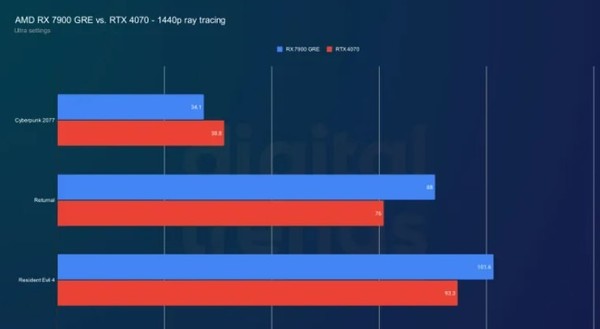
In games with extremely high requirements for ray tracing, Nvidia still stands out. As mentioned earlier, the RX 7900 GRE is about 16% faster than the RTX 4070 overall, and this average takes into account the ray tracing test results. Despite its significant advantage, Nvidia is still far ahead in Cyberpunk 2077.
Comparing RTX 4070 Ti Super and RX 7900 XT, Nvidia’s advantages in ray tracing are still obvious. The two cards battle each other in less demanding games, but in Cyberpunk 2077, Nvidia continues to hold a huge lead.
While AMD is competitive in some ray tracing games, Nvidia still has the upper hand in this area. Typically, turning on ray tracing can have a significant impact on performance. RTX versions of games such as “Cyberpunk 2077”, “Alan Wake 2” and “Portal” present stunning visual effects due to the use of complex and sophisticated lighting technology, and NVIDIA's high temperature control is even better in dealing with such high-load scenarios.
DLSS and FSR
An important criterion for judging the quality of a GPU is its additional functions. In recent years, both AMD and Nvidia have increased investment in software levels beyond the chip. For AMD, the focus is FidelityFX Super Resolution (FSR), while Nvidia is focusing on Deep Learning Super Sampling (DLSS). There are many differences between the two.
Let’s first look at AMD’s FSR. Its core consists of two parts: the first is the upgrade function, which is suitable for any GPU and improves performance by rendering games at a lower resolution; the second is FSR 3, which adds frame generation, compares two consecutive frames and generates intermediate frames to increase the frame rate. Currently, only a small number of games support it.
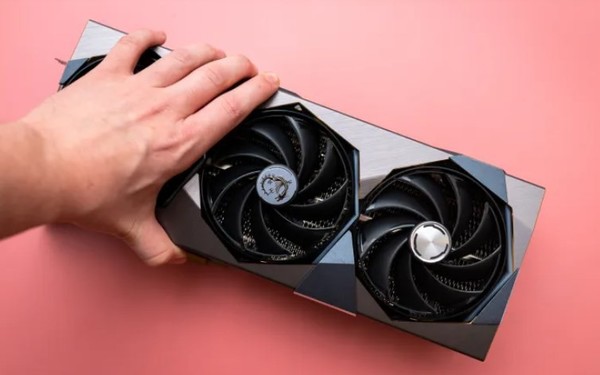
One of the great advantages of FSR is its wide compatibility, not only for AMD GPUs, but also for Nvidia and Intel products. However, its visual effects are not always the best. For example, in “Horizon West”, FSR's picture is softer compared to DLSS, especially in the presentation of Aloy's hair and surrounding vegetation.
Another shortcoming is that although FSR 3's frame generation function has potential, it currently supports only a handful of games. Although games such as “Cyberpunk 2077” and “Warhammer 40K: Darktide” have promised to add this function, they have not yet been updated.
Turning to NVIDIA's DLSS, it includes three major modules: super-resolution, light reconstruction, and frame generation, all based on AI technology and required to run on the dedicated accelerator of the RTX GPU. Compared with FSR, DLSS shows stronger detail retention and better stability in games such as “Hogwarts Legacy”. It is especially better than FSR when dealing with subtle ghosting and flickering problems.
DLSS's super-resolution and ray reconstruction are available on all RTX GPUs, while frame generation is designed specifically for the latest RTX 40 series. Although it is slightly better than FSR 3 in terms of effect, the gap between the two is not big. What really makes Nvidia stand out is that DLSS 3 is widely used in many games such as “Alan Wake 2”, “Cyberpunk 2077” and “Remnant 2”.
Since the advent of DLSS, NVIDIA has always maintained a lead over AMD at the functional level, and this is still the case today. DLSS is not only one of the key reasons to buy Nvidia GPU, but also a key technical support to ensure that games such as “Alan Wake 2” and “Cyberpunk 2077” can run smoothly in demanding ray tracing modes.
Software and drivers
In terms of driver support, there is no obvious difference between AMD and Nvidia. Both have had occasional problems with driver releases in the past, but they were able to deal with them quickly. Both parties also often update drivers simultaneously when new games are released. If you want to compare only a certain game or driver version, you may be able to find a temporary winner, but overall, AMD and Nvidia are evenly matched in terms of driver quality and update support.
As for software, Nvidia once led by a large margin, but with the launch of new applications, the situation has changed. Today's NVIDIA unified application integrates drivers, recommended settings, game recording, and additional applications such as NVIDIA Broadcast and ICAT. It covers standard functions such as screenshots, Shadowplay screen recording and instant replay, as well as unique functions provided by Freestyle, such as using RTX GPU to achieve RTX dynamic vitality and RTX HDR, and using AI technology to enhance the visual effects of the game.
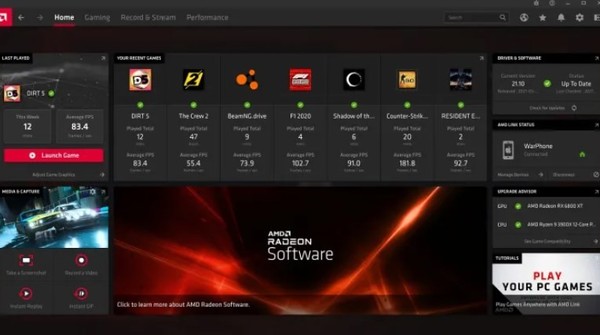
Unlike the old version of GeForce Experience, you can use the new NVIDIA application without registering an account to enjoy all functions. This improvement has greatly shortened the distance between NVIDIA and AMD at the software level.
AMD's Radeon Software also has a powerful feature set, covering instant replay, screenshots and screen recording, performance monitoring, graphics settings, live streaming and GPU overclocking, similar to GeForce Experience. In addition, Radeon Software also provides Integer Scaling to optimize the display of retro games on modern monitors, and AMD Link, which allows users or friends to remotely connect the PC to various devices. All AMD gaming technologies, such as FreeSync, Radeon Chill and Radeon Anti-Lag, can be managed through Radeon Software.
Although AMD has made significant progress in recent years with Radeon Software, Nvidia's new application allows it to catch up. Nowadays, no matter whether they choose AMD or Nvidia, users can get high-quality and comprehensive services in terms of software experience, which is indistinguishable.
GPU
In addition to desktop graphics cards, NVIDIA and AMD are also involved in the field of mobile GPUs, but laptops equipped with NVIDIA graphics cards are more common on the market. Similar to the pattern of Intel and AMD in the CPU market, Nvidia has a higher share of the mobile GPU market. A common combination is notebooks with Nvidia graphics cards and Intel processors.
It is difficult to generalize about the performance comparison between AMD and Nvidia mobile GPUs. For example, the RX 6800M in the ASUS ROG Strix G15 surpasses the RTX 3080 in the MSI GS66 Stealth in performance, but this is mainly because the latter does not use the full-power RTX 3080 and has a weaker cooling system. Therefore, it is not accurate to assert that AMD is more suitable for mobile graphics cards, and the actual performance is far more complicated than simply comparing raw performance.
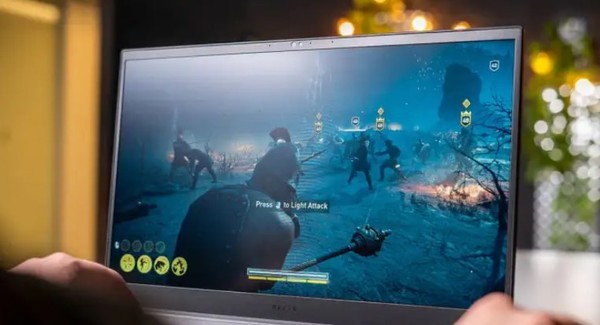
Mobile graphics cards are different from desktop graphics cards in that their power consumption is flexibly set by notebook manufacturers. For example, the RTX 3080 in the MSI GS66 Stealth has a power consumption limit of 95W, while the same graphics card in the Razer Blade 3080 can reach 105W, so the performance is naturally better. Considering the different cooling solutions of each brand, the comparison between mobile graphics cards becomes complicated.
When it comes to mobile GPUs, individual notebook evaluations are crucial. It is true that there are performance differences between graphics card models, such as RX 6800M being better than RX 6700M, etc. But when comparing graphics cards of similar grades, the overall design of the notebook has an impact on performance even more than the choice of AMD or Nvidia GPU itself.
Finally, don't forget about DLSS and ray tracing. NVIDIA mobile GPUs also support these features, and our conclusions on desktop cards also apply to mobile platforms.
write at the end
For many years, AMD has been committed to matching or even surpassing Nvidia in performance, and the RX 7000 series of graphics cards has achieved this goal. As a result, the focus turned to pricing and functionality. In terms of price, AMD graphics cards are generally lower than similar products from Nvidia. However, considering the presence of ray tracing and DLSS technology, Nvidia's extra cost seems worth it.
This does not mean that AMD is the second best choice. In fact, by 2024, AMD has become the more attractive option it has been in years. If you pursue cost-effectiveness, focus on maximizing overall performance, and don't have high demand for additional features, AMD is undoubtedly the ideal choice. However, given how heavily reliant many of this year's games are on these features, Nvidia's technical advantages make it our top choice in this comparison.
magicCubeFunc.write_ad(“dingcai_top_0”);




 Login with Google