
 Gearbest Tech

[Gearbest News]On the evening of October 18, Apple directly launched a number of new iPad products on its official website. Although the tenth-generation iPad, which is the entry-level iPad, has finally been replaced with a full-screen display, the starting price has also reached 3,599 yuan. As a result, many consumers who originally planned to buy it chose to buy the cheaper previous-generation products. However, many people have discovered that after the release of the new iPad, Apple quietly increased the prices of many older iPad models. And this phenomenon is not just in China, but also involves other parts of the world except the United States.

iPad mini 6
Apple has significantly increased prices on existing iPad mini models in non-U.S. markets after updating its online store on Tuesday with new entry-level iPad and iPad Pro models, MacRumors reports. Taking the UK as an example, the 64GB version of iPad mini 6 is currently priced at £569, which is higher than the price of £479 earlier in the day, an increase of up to £90 (approximately 732 yuan). The 256GB version is priced at £749, up from the previous price of £619. Price increases of 19% and 21% respectively make the iPad mini 6 more expensive than the new 10.9-inch iPad, which starts at £499 and £649 for the same capacity.
In addition to the UK, countries in the European Union have also seen similar price increases. In Italy, the 64GB and 256GB iPad mini models are now priced at €659 and €859 respectively, compared with previously selling for €559 and €729, a price increase of 18%. In addition, markets in India and across the Asia-Pacific region have also seen corrections, with iPad mini 6 prices increasing by about 11% in Australia. In the domestic market, the price of the phone has also increased by 200 yuan to 3,999 yuan. Although the price increase is not as high as in the European market, it also increases the purchase cost for consumers.
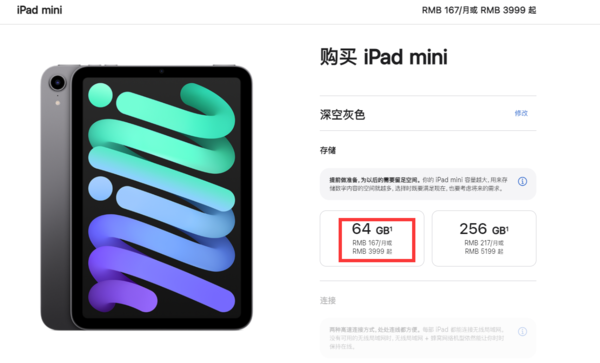
iPad mini 6 domestic price
Although Apple did not explain the reason for this large-scale global price increase, there is news that the price increase may be related to the strengthening of the U.S. dollar, inflation and increased costs. Due to the continuous interest rate hikes by the Federal Reserve in recent times, the currencies of other countries have continued to depreciate, thus increasing costs in disguise.
magicCubeFunc.write_ad(“dingcai_top_0”);





 Login with Google