
 Gearbest Tech
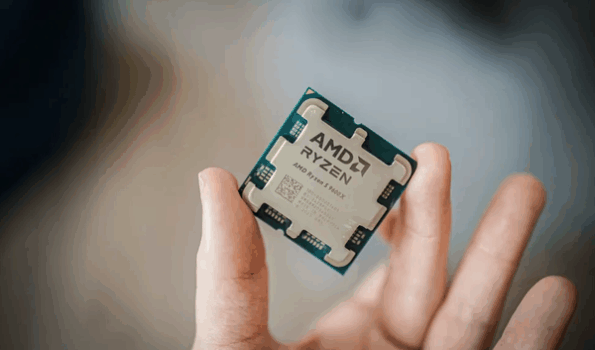
[Gearbest Technology]Among the two popular components for PC upgrades, graphics cards and processors undoubtedly occupy the core position. With the launch of the AMD Ryzen 9000 series and the upcoming launch of Intel's Arrow Lake-S series processors, you might think that gamers would be rushing to upgrade. However, is this really the case?
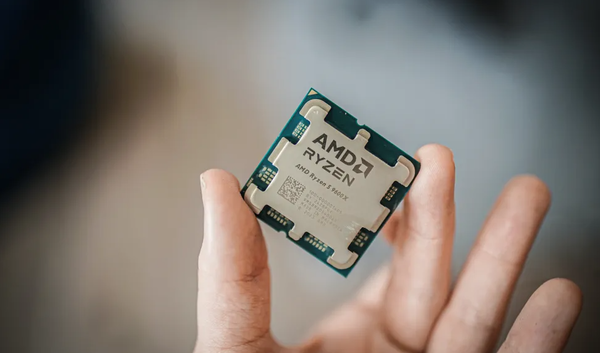
Ryzen 9000 series improvements are minimal
It's been over a month since the first Zen 5 processors were released, but these CPUs have yet to make a significant splash in the market. While specific sales figures are hard to come by, some retailers are reporting slow sales of the Zen 5, which is somewhat unsurprising. The performance improvements between Zen 4 and Zen 5 are relatively limited, making it difficult for gamers to upgrade.
The test results show that the Ryzen 9000 series CPU performs “robustly”. The series consists of four products: the high-end Ryzen 9 9950X and Ryzen 9 9900X, and the mainstream Ryzen 7 9700X and Ryzen 5 9600X. They are all better than the previous generation Zen 4 products, but the single-digit performance increase cannot support the price of more than 4,500 yuan, making consumers less willing to buy new models.
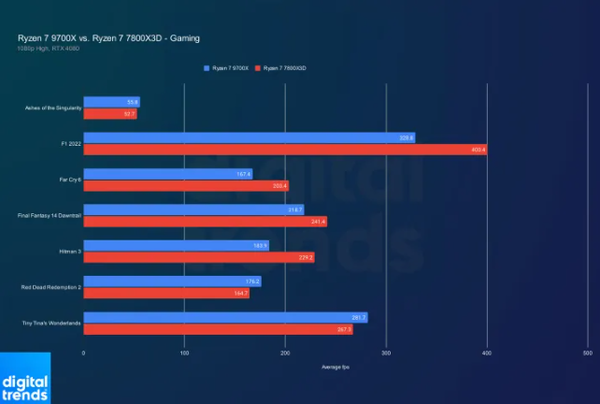
Zen 5 chips excel at productivity tasks and single-core performance, but in most gaming scenarios, these factors are of relatively low importance. Comparing the Ryzen 7 7800X3D, the leader in gaming processors, with the Ryzen 7 9700X, the former lags behind by about 20% in single-core performance. However, in terms of game performance, both have their own merits. In some games, the performance of the two is similar, but in most cases, the previous generation CPU performs better, especially in the game “F1 2022”, where Ryzen 7 7800X3D leads with a significant advantage of 18%, reaching 400 frames per second, while Ryzen 7 9700X reaches a maximum of 328 FPS.
Of course, there is a certain degree of asymmetry when comparing the Ryzen 7 9700X to the Ryzen 7 7800X3D, as the additional 3D V-Cache makes the Ryzen 7 7800X3D more competitive in gaming scenarios. But from a gaming performance perspective, Ryzen 7 9700X’s performance is slightly disappointing. Even compared to the previous generation Ryzen 7 7700X, the Ryzen 7 9700X failed to show significant advantages.
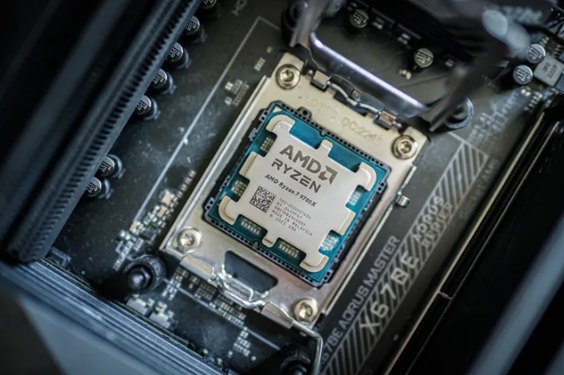
The well-known external self-media platform “Hardware Unboxed” compared the performance of Ryzen 7 9700X and Ryzen 7 7700X in a test suite of 40 games. This test used the new Windows Update, which can increase the performance of Ryzen 7000 and 9000 series CPUs by up to 13%. However, for consumers interested in buying Zen 5 CPUs, the test results are not optimistic – the performance difference between the two chips is within 2%, which is almost negligible, and it is difficult to feel this subtle difference in any game.
Despite Zen 5's productivity gains, the launch is a bit of a letdown for gamers. If you already own Zen 4, there is currently little need to upgrade to Zen 5.
Intel Arrow Lake processors may disappoint
Intel is developing a new generation of desktop processors, the Arrow Lake series, also known as Intel Core Ultra 200. The processor is expected to be officially launched on October 24.
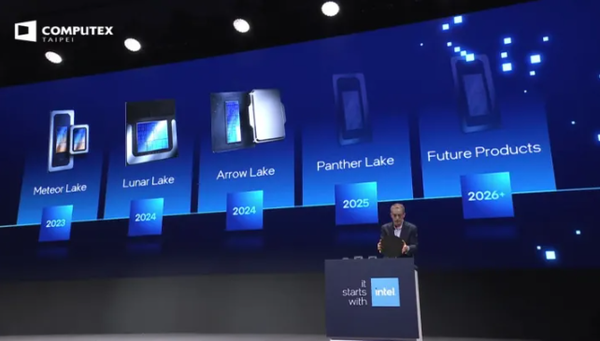
Regarding the performance improvements that Core Ultra 200 may bring, multiple sources have given different predictions. There are rumors that its instructions per cycle (IPC) can achieve an increase of up to 15%, but some sources believe that this increase may be as low as 5%. It is worth noting that a 15% increase in IPC does not mean a corresponding 15% increase in game performance. This correlation is not absolute.
Leaked benchmark results show that the Core Ultra 7 265KF is slightly better than the Core i7-14700KF in single-core performance, but performs on par or slightly worse in multi-core performance.
Of course, the results of a single benchmark test cannot fully reflect the performance of the processor. The Core Ultra 7 265KF and other models will likely perform better than the previous generation. But if the most pessimistic prediction comes true, that is, the performance improvement is only between 5% and 15%, and this improvement is not directly reflected in game performance, then this generation of products does lack enough highlights.
The limitations of the Core Ultra 200 series in performance improvement also raises another issue, namely cost-effectiveness. Given that the Ryzen 7 7800X3D still maintains its strong competitiveness, spending up to $650 on a processor such as the Core Ultra 9 285K is not cost-effective. It is true that the Core Ultra series will undoubtedly have the upper hand in productivity tasks, and may even surpass the 7800X3D in some game performance, but how many gamers will be willing to pay the extra high cost for these slight advantages?
Intel may be able to take some solace from the current market conditions for the Ryzen 7 7800X3D. This product is either sold out or the price has increased abnormally, which may be related to the recent launch of the Ryzen 5 7600X3D exclusive to Micro Center.
Given the modest performance gains this generation and the issues experienced by users of the Raptor Lake series, many gamers may choose to skip this generation of Intel products. However, the final outcome is still unknown.
Fortunately, there is another upcoming CPU that gamers can look forward to.
There is 1 CPU left that can be trusted
The savior mentioned here is undoubtedly the Ryzen 7 9800X3D. Since AMD launched Ryzen 7 5800X3D and demonstrated the excellent performance of 3D V-Cache technology in games, the X3D series of processors have attracted much attention, and Ryzen 7 9800X3D is no exception. Especially when the performance of the non-X3D version is slightly insufficient, expectations for this processor continue to rise.
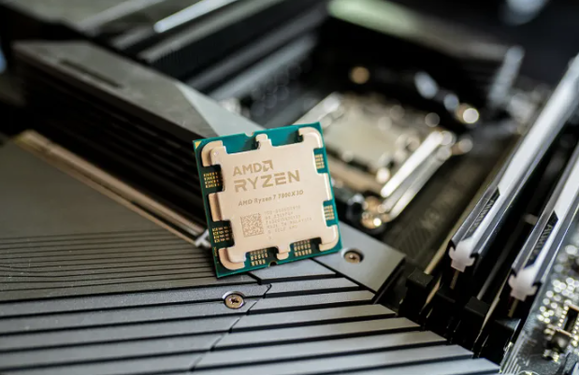
Although AMD has not announced the specific release date of Ryzen 7 9800X3D, its launch is not far away. Many users have high hopes for this chip. According to people familiar with the matter, Intel’s most powerful Arrow Lake CPU cannot match Ryzen 7 9800X3D in terms of gaming performance. The following are some speculations about Ryzen 7 9800X3D, for reference only.
If the prediction is accurate, it may be difficult for gamers who focus on gaming to find a good reason to choose Intel products after the release of AMD's 9800X3D processor. AMD is not expected to set the price of the 9800X3D above $500, while Intel is unlikely to drop the price of its Core Ultra 9 285K processor below $600. Although the Core Ultra 7 series is a strong competitor, it may lag behind the 9800X3D in terms of gaming performance.
As for the differences between the Ryzen 7 7800X3D and the next-gen 9800X3D, it's difficult to say for sure yet. The performance gap between 5800X3D and 7800X3D is about 15% to 20%. If Zen 5 can also achieve this improvement, it will be a satisfactory result. But for users who already have a Zen 4 CPU, this improvement may not be enough to prompt them to upgrade.
Those still using Zen 3 may want to upgrade after the X3D chip is released, but until then, they may continue to wait and see.
write at the end
So far, performance in the PC hardware space has been disappointing. The release of the next generation GPU is expected to be delayed until the end of the year, and the release situation of the CPU also appears to be unsatisfactory. In this case, consumers may consider temporarily saving money and waiting for the beginning of 2025. By then, new generation products such as Nvidia's RTX 50 series, AMD's RDNA 4 and Intel's Battlemage will be launched one after another. As for the CPU, consumers may be able to look forward to the launch of Zen 6.
magicCubeFunc.write_ad(“dingcai_top_0”);






 Login with Google