
 Sophia Windsor
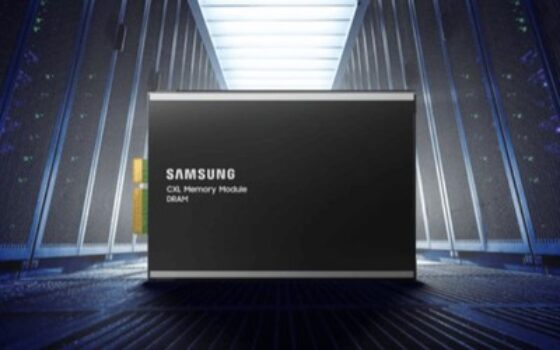
[ Gearbest Technology News]On May 12, according to the latest news from Korean media, Samsung Electronics plans to promote mass production of memory modules based on the CXL 3.1 standard in the fourth quarter. Industry news shows that Samsung will provide CMM-D samples to major server and data center customers starting in the third quarter. If it passes quality verification, it will determine the production scale and enter the mass production stage in the fourth quarter.
Samsung
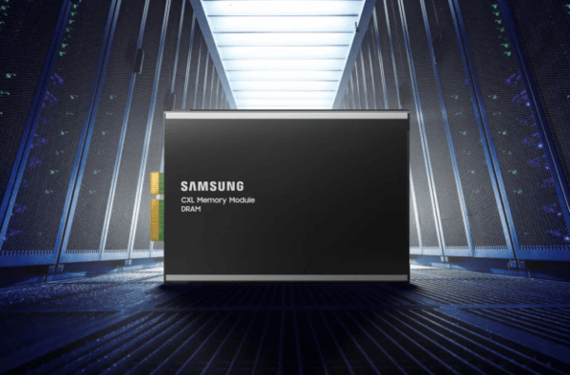
CXL is a high-speed interconnect standard based on PCIe technology, designed to improve the efficiency of data transmission between CPU, memory and GPU. The CMM-D 3.1 module launched by Samsung this time integrates multiple DRAM chips and a dedicated CXL controller on a PCB, which reduces latency and increases speed compared to the previous generation CXL 2.0. The module has a maximum capacity of 1TB, a bandwidth of 72GB per second, and is based on the PCIe 6.0 interface. The CMM-D 2.0 has a maximum capacity of 256GB, a bandwidth of 36GB/s, and is based on PCIe 5.0.
CXL technology supports memory pooling, and each processor can allocate memory on demand to improve utilization. Unlike high-bandwidth memory (HBM), CXL is slower but complementary and can flexibly expand capacity and connect through interfaces like SSD without significantly changing the server architecture.
Samsung previously completed the development of CMM-D 2.0 samples in May 2023 and supplied it to more than 40 customers around the world, including cloud service providers such as Microsoft, Google, and Amazon, as well as server companies such as Dell and Super Micro. CMM-D 3.0 samples will also be supplied to these customers. Samsung originally planned to launch CMM-D 3.1 before the end of 2025, but due to strong demand for general-purpose DRAM and HBM, the commercialization priority of CXL has declined.
According to market research institutions, the CXL market will grow from US$2.1 billion in 2025 to US$16 billion in 2028, mainly driven by the demand for extended memory technology in AI data centers. Relevant industry chains including controllers, IP design, PCB and other manufacturers are expected to benefit.





 Login with Google