
 Sophia Windsor

[ Gearbest Technology News]Faced with the increase in memory demand brought about by the new round of data center construction, shared memory pools are being regarded as a solution to alleviate RAM tension. Based on the Compute Express Link (CXL) standard, in the future, data centers can extract some memory resources from a single server and concentrate them into a shared memory pool, which can be called by multiple servers on demand, thus improving resource utilization efficiency.
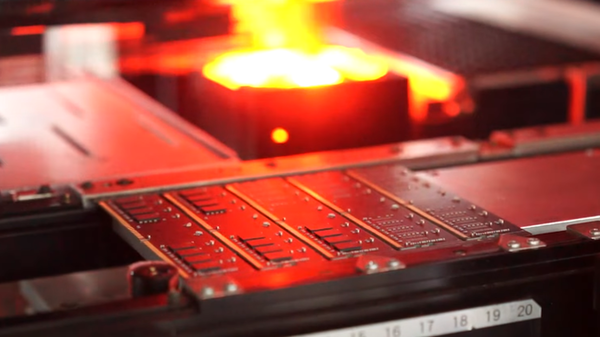
Picture source network
The core of this solution lies in the cache-coherent interconnect capabilities provided by CXL. The standard has been developed over the years to connect processors, memory and accelerators such as GPUs. Early versions were mainly used to expand memory capacity, while CXL 3.0, which is about to play a greater role, further supports dynamic sharing of memory resources between multiple systems. According to this idea, memory is no longer fixedly assigned to a certain server, but can be flexibly allocated among multiple devices, and even allows multiple servers to access the same memory data at the same time, reducing duplicate data usage.
Judging from industry progress, existing processors from AMD and Intel already support earlier versions of CXL. With the launch of the new generation of Epyc and Xeon processors, this technology is expected to be deployed on a larger scale in data centers. Amazon's new generation Graviton5 processor is also mentioned to support the current standard.
The direct significance of the shared memory pool is to improve the use efficiency of expensive memory resources. Enterprises can allocate RAM based on actual load without having to configure the highest specification memory for each server, which can help alleviate DRAM shortages and control costs. However, this architecture also has obvious limitations. Memory accessed over the network is still slower to respond than local memory, and while the additional latency is considered relatively limited, highly latency-sensitive applications may still be affected.
At present, relevant hardware manufacturers have begun to promote productization. Companies such as Liqid and UnifabriX have launched memory platforms that can be used by multiple hosts, providing up to 100TB DDR5 memory capacity; at the same time, companies such as Panmnesia are also developing CXL switching chips for large-scale memory interconnection. Overall, as AI applications continue to drive up data center memory requirements, CXL-based shared memory pools are gradually moving from technical concepts to actual deployment.





 Login with Google