
 Sophia Windsor
[ Gearbest Technology News]Korean display companies are accelerating their transformation to high value-added OLED products to cope with the offensive of Chinese manufacturers in terms of production capacity and shipments. Industry sources said that Samsung Display and LG Display have consolidated their leading positions in the high-end market by promoting “hyper-gap” technology and expanding investment in facilities.
Screen
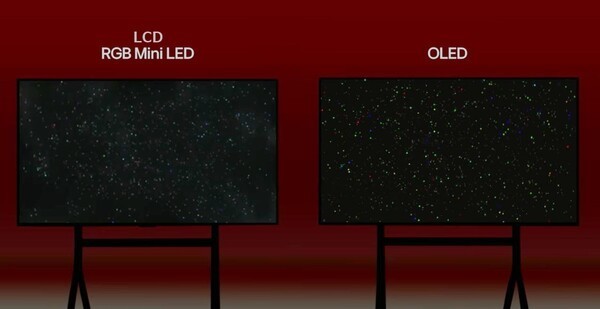
LG Display disclosed on April 28 that its consolidated revenue in the first quarter was 5.5340 trillion won, and its operating profit was 146.7 billion won. Despite being in the traditional off-season, operating profit increased by 338% year-on-year and achieved profitability for the third consecutive quarter. The company stated that the performance improvement comes from the introduction of cost-reduction technology, improvement of operational efficiency, and adjustment of business portfolio around strategic customers. During the same period, OLED's revenue share increased to 60%, and the average selling price by area increased by 55%. In order to continue the profit trend, LG Display plans to use tandem OLED technology to increase profit margins and increase the proportion of fast-growing OLED display products from low double digits last year to 20% this year; at the same time, it will invest 1.1060 trillion won to build new technology infrastructure at the Paju factory. At the technical level, the company claims that its large-size OLED panel has obtained “100% brightness retention” verification and achieved a peak brightness of 4,500 nits and an ultra-low reflectivity of 0.3% through pixel-level light emission. LG Display’s net loss in the first quarter was 570.7 billion won, due to the impact of the won’s exchange rate against the U.S. dollar and one-time costs.
Samsung Display is focusing on the mass production of 8.6-generation OLED for IT use, with a total investment of 4.100 trillion won. The production line has a planned monthly production capacity of 15,000 pieces, and the glass substrate area is 2.25 times that of the existing Gen-6 line to improve cost efficiency and production efficiency. The recent yield rate has exceeded 80%. The company has shipped 8.6-generation paid samples to customers in January this year, and plans to launch large-scale mass production from June to July at the earliest and supply products such as Apple MacBook to be released next year. In addition, all its TV and monitor QD-OLED products have completed “Quantum View” certification, saying that they can maintain more than 60% of front brightness at a 60-degree side viewing angle.
Market research firm Omdia predicts that global OLED display panel shipments will reach 5.4 million units this year, a year-on-year increase of approximately 60%. At the same time, Counterpoint Research pointed out that the market's concerns about China's OLED production capacity exceeding South Korea's in 2029 have increased; BOE, CSOT and other companies are accelerating expansion with the support of more than 80 trillion won in investment and subsidies. South Korea has also included “ensuring OLED super-gap” into the direction of support through National Growth Fund-related projects to assist companies in facility investment.
magicCubeFunc.write_ad(“dingcai_top_0”);



 Login with Google