
 Gearbest Tech
[Gearbest Technology]Huawei’s Hongmeng Universe puzzle is finally about to be filled with the last piece.
When mobile phones, tablets, and car computers have been connected to the Hongmeng ecosystem, the absence of the PC end is always like an invisible wall, blocking the complete intelligent experience outside the door. The continuous pressure from external supply cuts has actually caused the wall to crack – Huawei chose to develop its own PC system to complete the final breakthrough. In May this year, Hongmeng Computer will be officially unveiled.

It is not easy to break the Windows monopoly, Hongmeng’s trump card is ecological logic. The characteristics of developing multi-end deployment at one time can theoretically allow millions of mobile applications to flow seamlessly to the computer. The software ecosystem that users are familiar with does not need to be reversed and the cost of adapting developers is also greatly reduced.
The opportunity window for Hongmeng PC has been opened. The AI PC concept swept the market, but Microsoft delivered a disappointing answer: the AI experience of Windows 11 is like scratching the surface. On the other hand, Hongmeng Computer can not only take advantage of the explosion of the domestic AI industry, but also add the policy dividends of domestic substitution to seize the initiative.
The significance of putting Hongmeng PC into the development history of domestic operating systems is clearer. Compared with the seniors, Hongmeng’s path is completely different. It is born with a mobile Internet gene and uses a distributed architecture to reconstruct human-computer interaction. While other systems are still catching up with Windows, Hongmeng has targeted a new battlefield for AI and the Internet of Things. This battle to break the “wall” may rewritten the survival rules of domestic operating systems.
Gearbesthereby launches the special topic of “Hongmeng PC Breaking the Wall” and this article will discuss with you “Why Huawei needs to launch Hongmeng PC”.
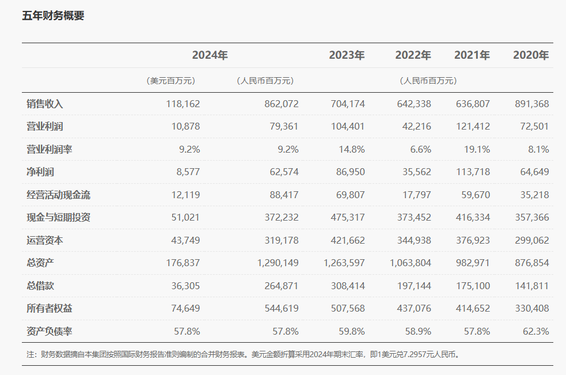
According to the official website information, in 2024, Huawei's total revenue reached 862 billion yuan, an increase of about 160 billion yuan compared with 2023, and its performance is amazing. However, as the saying goes, “the big tree attracts the wind.” Even with revenue of 800 billion yuan, Huawei is still under pressure from multiple aspects, and the PC market is one of them.
When the Damocles sword, which was terminated by Microsoft's Windows authorization, fell, when Intel chips were cut off, threatened supply chain security, and when the “1+8+N” full-scene strategy was a bit regrettable due to the lack of PC, Hongmeng PC has become a technological breakthrough war related to ecological sovereignty for Huawei, and is a key battle that Huawei must win in the trillion-dollar market.
A trillion-dollar market has great potential
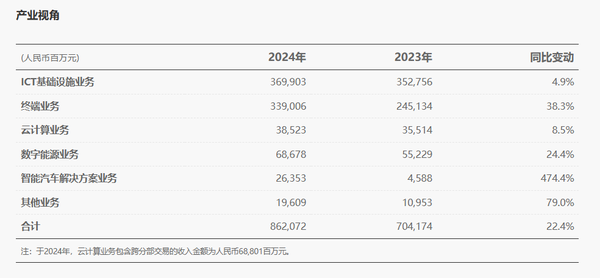
Judging from the financial data released by Huawei, its total terminal business revenue reached 339 billion yuan in 2024, second only to ICT infrastructure business among Huawei's internal business segments, and firmly ranked second in the second largest business. Compared with 245.1 billion in 2023, Huawei's terminal business achieved a significant growth of up to 38.3%, which is second only to the smart car solution business among Huawei's many businesses. Although Huawei has not disclosed the details of the revenue composition of the terminal business in detail, data from multiple parties strongly show that the PC business plays an important role in it and its contribution should not be underestimated.
From the overall pattern of the global PC market, global personal computer (PC) shipments in the fourth quarter of 2024 reached 64.4 million units, an increase of 1.4% over the same period in 2023, and have maintained a growth trend for five consecutive quarters, which undoubtedly sends a positive signal that the PC market is gradually recovering and demand is steadily recovering. Focusing on the Chinese market, Canalys' data depicts the strong development trend of Huawei's PC business for us: in 2024, Huawei shipped more than 4.3 million PCs in the Chinese market, accounting for 11% of the market share, and a month-on-month growth rate of up to 15%, surpassing traditional old-fashioned powerhouses such as HP and Asus in one fell swoop, and successfully becoming one of the second largest PC manufacturers in the Chinese market.
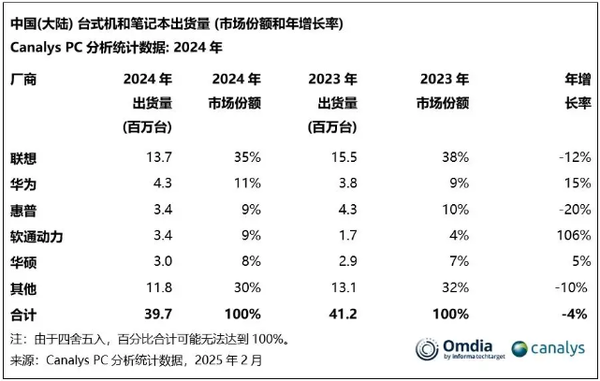
It is worth noting that in sharp contrast with brands such as Lenovo, Asus, HP, and Mechanical Revolution, Huawei's positioning in the PC market has always been anchored in the mid-to-high-end field. Even the MateBook D series, which is relatively affordable, has a minimum price of 3,999 yuan; and the MateBook X series easily stands firm in the high-end market for 10,000 yuan with its excellent quality and innovative design.
From the perspective of brand building, Huawei's PC business helps to strengthen its high-end, technological and innovative brand image and enhance brand tone; from the perspective of market revenue, PC business has become an important growth pole for Huawei's terminal business, playing a key role in the stability and growth of Huawei's overall revenue. Therefore, even with severe challenges such as Intel chip supply cutoff and Microsoft system blockade, Huawei still has enough motivation and determination to fully promote the research and development and promotion of Harmony PCs.
Hongmeng Ecosystem, PC is indispensable
Moreover, PC occupies an indispensable core position in Huawei's “1+8+N” full-scene strategic layout.
At present, Huawei has successfully built a rich product matrix covering multiple terminals such as mobile phones, tablets, and smart screens. However, PC, as the core device in the field of productivity, has long relied heavily on the Windows ecosystem. This dependence not only limits Huawei's space to play in cross-device collaborative innovation, but also restricts the integrity and fluency of Huawei's full-scene smart ecosystem to a certain extent. The launch of Hongmeng PC is like an accurate key, providing Huawei with the possibility of a revolutionary breakthrough in cross-device collaboration.
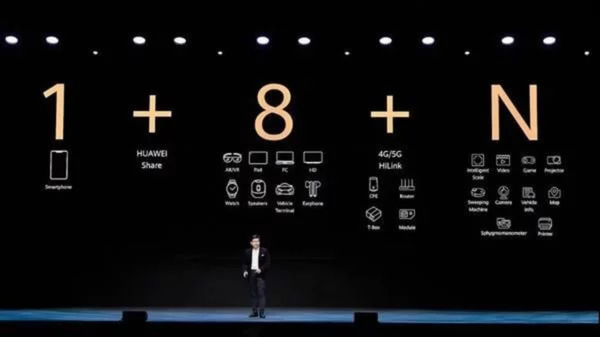
To deeply understand the strategic significance of Hongmeng PC, we have to mention the connotation of Huawei's “1+8+N” full-scene strategy. During the early publicity phase of HarmonyOS, Huawei once promoted HarmonyOS's strong support for the “1+8+N” strategy. Based on the traditional single-device system capabilities, HarmonyOS innovatively proposed the distributed concept based on the same system capabilities and adapted to multiple terminal forms. This concept allows HarmonyOS to seamlessly support a variety of terminal devices such as mobile phones, tablets, smart wearables, smart screens, and car computers, providing users with business capabilities covering all scenarios such as mobile office, sports and health, social transportation, and media entertainment.
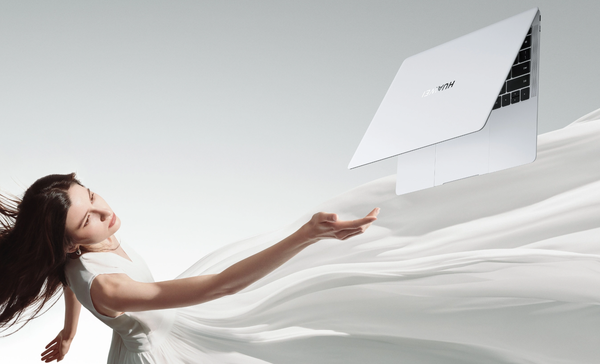
In the “1+8+N” strategy, notebooks undoubtedly occupy a core position. From the perspective of the influence of product categories, PC, as an indispensable productivity tool for people's daily work and learning, has a broad user base and a very high frequency of use; from Huawei's own biased consideration of products and usage scenarios, PC bears the key mission of connecting various terminal devices and realizing data interoperability and collaborative operation in the full-scene smart ecosystem, and its importance may be second only to mobile phones. If the key link of PC is missing, the “1+8+N” strategy will face the severe test of the “barrel effect”, and the integrity and user experience of the entire ecosystem will be affected.
Break through technical blockade, PC system needs to be independent and controllable
In March 2025, Microsoft's Windows license to Huawei officially expired and has not been extended. This incident is like a bombshell, meaning that Huawei's PC products will not be able to continue to be pre-installed with Windows operating systems. However, this situation is not an emergency without warning. As early as September 2024, Huawei's executive director Yu Chengdong publicly warned that “Windows PCs may be suspended.”
Microsoft's decision undoubtedly brought unprecedented challenges to Huawei's PC business, but it also became a powerful driving force to accelerate Huawei's move to an independent Harmony PC system. To this end, Huawei quickly adjusted its strategic layout and planned to release its first laptop equipped with the Hongmeng operating system in May 2025.
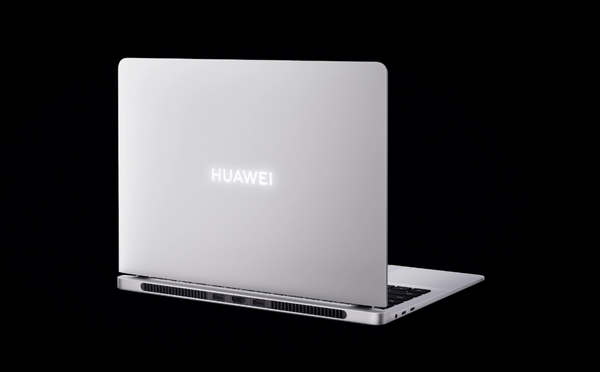
Looking back at Huawei's development history, the company has been facing tremendous pressure from the outside in recent years. As early as 2019, when Huawei encountered sanctions in the mobile phone business field, it deeply realized the urgency of key core technologies that must be mastered in its own hands. In 2023, Ren Zhengfei said in an internal speech that even in the three difficult years of being sanctioned by the United States, the company has successfully completed arduous tasks such as the replacement development of 13,000+ devices and the repeated board replacement development of 4,000+ circuit boards. But Huawei understands that in addition to self-development of hardware, independence and autonomy of the operating system are also essential.
In the second half of 2024, Huawei released the landmark HarmonyOS NEXT, which completely got rid of its dependence on foreign operating system technology and achieved a major leap of independent and controllable. As China's first full-stack self-developed mobile operating system, HarmonyOS NEXT is the first major version of Hongmeng abandoning Linux kernel and Android Open Source Project (AOSP). The system only supports applications of the Hongmeng kernel and Hongmeng system and is no longer compatible with Android applications.
The development of HarmonyOS on the basis of HarmonyOS is an inevitable measure taken by Huawei to get rid of excessive dependence on Microsoft Windows systems. On the other hand, it has opened up a new path of independent innovation and independent development for China's PC industry, which is expected to promote China's PC industry to overtake in the global competition.
Seize the wave of AI PC upgrade
As the saying goes, danger and opportunity coexist. At the historic node where Huawei officially decouples from the Windows ecosystem, the transformation of the PC industry driven by AI technology is launching a new round of knockouts. The latest data from Counterpoint Research shows that the AI PC market will usher in explosive growth: AI premium notebooks will usher in the first wave of expansion from 2024 to 2025, and the compound annual growth rates of AI premium notebooks and conventional AI notebooks will reach 49% and 12% respectively from 2025 to 2029. This industrial reconstruction triggered by the computing power revolution provides Huawei Hongmeng PC with an opportunity to break through.
The deep integration of the distributed architecture and AI capabilities of the Hongmeng system is reshaping the human-computer interaction paradigm. While competitors are still stacking hardware parameters, Huawei has built a cross-terminal intelligent matrix: for example, users can seamlessly connect and share data with other Hongmeng terminal devices through Hongmeng PC, and easily call files, photos and other materials in the mobile phone on the PC to realize file transmission and editing across devices; at the same time, with the powerful computing power of AI technology, Hongmeng PC can provide users with innovative functions such as intelligent voice assistants, intelligent image recognition, and intelligent office assistants, greatly improving users' work efficiency and user experience.
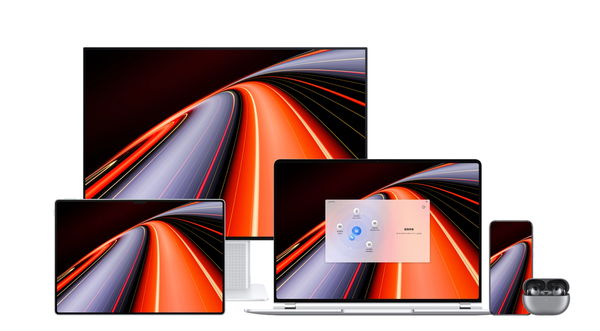
What is more worth noting is that Huawei's layout in all-scenario terminals has formed a unique barrier. While traditional PC manufacturers are still fighting alone, Huawei's terminal army is forming a collaborative combat system: mobile phones provide mobile computing power centers, tablets expand creative boundaries, wearable devices collect health data in real time, and vehicle computer systems continue the office scene. The ecological closed loop formed by this “1+8+N” strategy has made Hongmeng PC naturally have the potential to become the core entrance to the era of Internet of Things. Especially in the critical window period for AI to rebuild productivity, Hongmeng PC has huge potential.
Written at the end
The battle to break the wall between Hongmeng PC is not only a key battle for Huawei to deal with external blockades, but also a benchmark battle for Chinese technology companies to explore independent innovation paths. When the trillion-dollar PC market ushers in a window of AI transformation, can Hongmeng PC counterattack from “spare tire” to “mainstream” like Hongmeng in the smartphone era? The answer may be hidden in its courage to reconstruct industrial rules – after all, in the wave of technological revolution, those who break the wall are often also new rule makers.
magicCubeFunc.write_ad(“dingcai_top_0”);


 Login with Google